By Ahmet Göçen
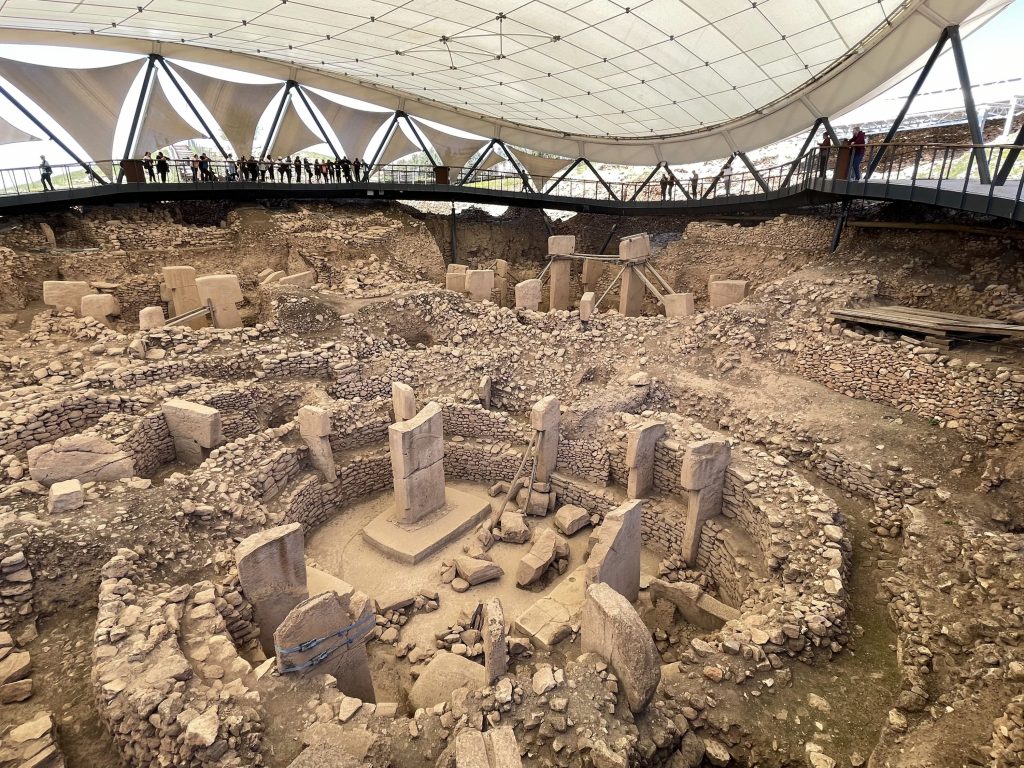
Göbeklitepe
There is a hill about fifteen kilometres northeast of Sanlıurfa where people were building on a monumental scale more than eleven thousand years ago.
At Göbeklitepe, hunter-gatherer communities raised enormous T-shaped limestone pillars, some reaching about 5.5 metres in height. They carved foxes, boars, birds, snakes and other wild animals into stone. This was the Pre-Pottery Neolithic: thousands of years before writing and the wheel.
We often speak about Göbeklitepe as if it were a beginning.
But the people who built it did not know they were standing at the beginning of anything.
They were simply living in their present.
The ancient people on that hill had no idea which chapter historians would eventually assign to them. They simply had difficult things to do together. Whatever the exact purpose of Göbeklitepe’s monumental buildings, constructing them required people to coordinate labour, share symbols and organize activity beyond a single household.
And once people have to act together, an old question appears:
How do we decide what we are going to do?
That is not only an archaeological question.
It is a governance question.
And it is surprisingly close to the question we are asking about artificial intelligence today.
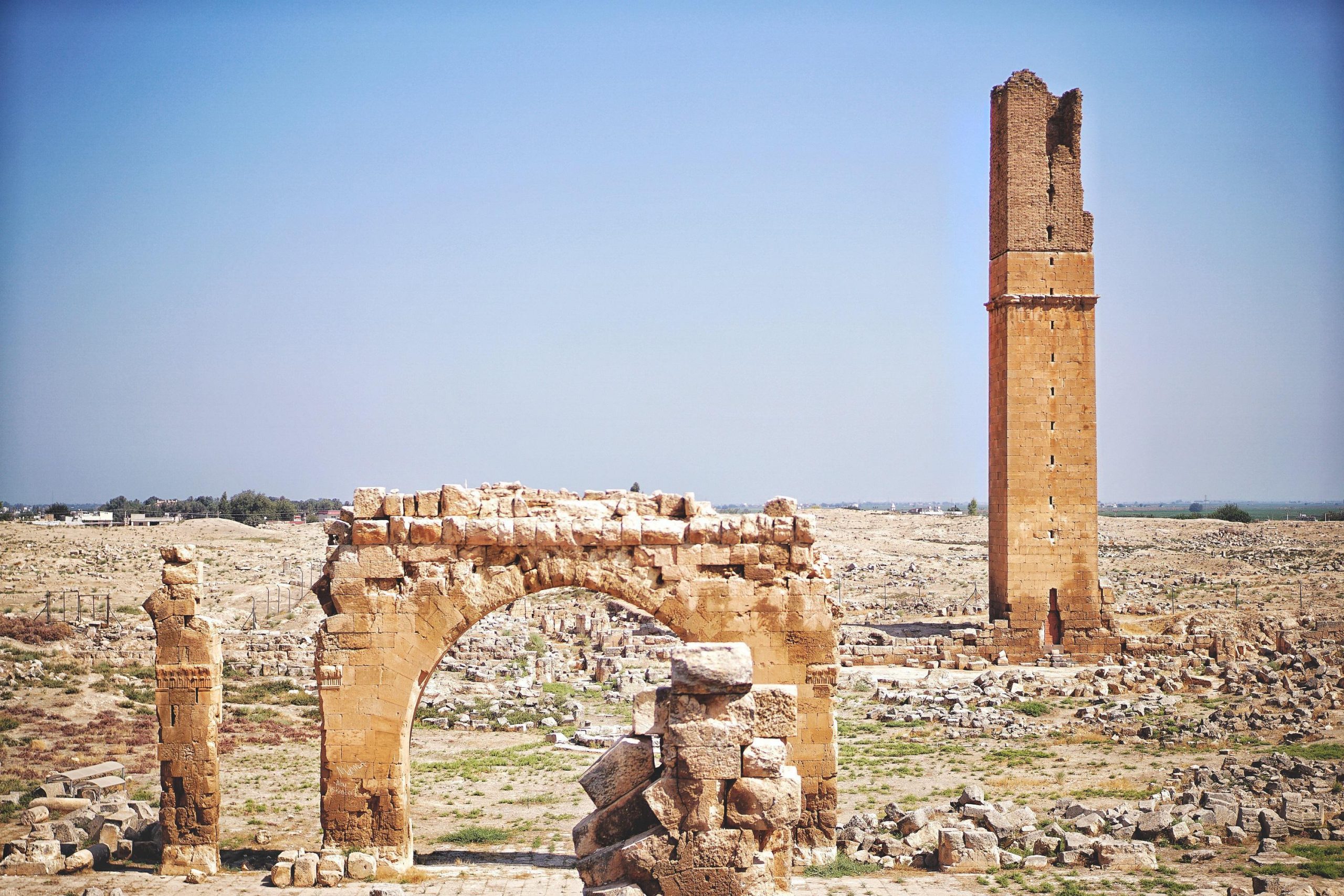
The scholar from Harran who made knowledge travel
South of Sanlıurfa lies Harran, close to Göbeklitepe. It hosts the remnants of the oldest university in the world.
One of the region’s most remarkable scholars was Thabit ibn Qurra, born near Harran in the ninth century. There is an important detail here. His story is sometimes told as though the famous translation movement happened entirely in Harran. It did not. Thabit later joined the Banu Musa circle in Baghdad, where his knowledge of Syriac, Greek and Arabic made him an important figure in the scientific translation movement.
But calling him simply a translator would also be unfair. He translated and commented on Greek and Hellenistic science, but he also produced original work in mathematics, astronomy and other fields. His writings on number theory included work on what mathematicians call amicable numbers.
I find his story useful for another reason.
Knowledge does not survive only because somebody discovers something.
It survives because somebody makes it understandable to the next group of people.
Somebody translates it.
Somebody explains it.
Somebody argues about it.
Somebody carries it across a boundary.
And that may be much closer to our role in YouthGovAI than we sometimes realise.
A sentence such as “AI governance should follow a proportionate, risk-based approach” may make perfect sense in a policy document.
But what does it mean to a seventeen-year-old?
Perhaps this:
If an AI system influences whether you get a job, a university place or access to a service, should you know that AI was involved?
Should someone be able to explain the decision?
Should you be able to challenge it?
Suddenly, governance is no longer an abstract word.
Someone has translated it.
Türkiye is writing the AI rules now for the young generations
Türkiye published its first National Artificial Intelligence Strategy for 2021–2025 in 2021. It established priorities around AI expertise, research and innovation, data and infrastructure, public-sector adoption, international cooperation and socio-economic adaptation. Then the legal and political discussion accelerated. On 13 June 2026, Türkiye announced its Artificial Intelligence Action Plan for 2026–2030. On 18 August, Presidential Circular No. 2026/9 was published, moving the plan formally into its implementation period.
The plan is organised around four remarkably simple expressions:
Discover. Benefit. Produce. Govern.
Türkiye therefore does not have one settled, comprehensive AI Act comparable to the EU AI Act in force today. Its framework is still being assembled through existing laws, strategy and action plans, parliamentary work, pending bills and sectoral guidance.
That sounds unfinished.
It is.
That is exactly why participation matters now.
Five million is not just a number
There is one number in Türkiye’s new Action Plan that I keep returning to:
5,000,000.
Under the National AI Literacy and Safe Use Programme, Türkiye aims to reach five million citizens through AI-literacy activities across all 81 provinces within two years.
Five million in twenty-four months.
That is roughly 208,000 people every month.
Read that number as a policymaker and it is a target.
Read it as a youth worker and it becomes something else entirely:
a logistics problem.
Five million people cannot learn AI literacy from a strategy document.
They will learn it in classrooms.
In municipal youth centres.
At universities.
In associations.
At workshops.
In libraries.
In ordinary rooms where somebody has a laptop, a projector if they are lucky, twenty young people and ninety minutes.
That “somebody” will very often be a teacher, youth worker, trainer, volunteer or civil-society organisation.
In other words, the people who can make this policy real are precisely the people who are easiest to overlook while writing the policy.
YouthGovAI has spent its work bringing young people, youth workers, civil society and policy questions into the same conversation.
So I do not read the five-million target as something happening somewhere above us.
I read it partly as an invitation.
Much of the human infrastructure needed for AI literacy already exists.
It is in the youth sector.
It is in our organisations.
It is us.
Back to the hill
The people at Göbeklitepe did not know what later generations would call what they were building.
Thabit ibn Qurra could not know which ideas crossing languages in ninth-century Baghdad would still be discussed more than a thousand years later.
And the young person building an AI project in Sanlıurfa today cannot know what rules will govern that technology twenty years from now.
The most important question may therefore not be:
What will AI become?
It may be:
Who was in the room while we were deciding?
Young people should be there.
Youth workers should be there.
Teachers should be there.
Civil society should be there.
We are not late.
We are not looking back at a finished story.
We are in the middle of it.
And that is exactly when our voice matters. AI is powerful. So are you.
